
Assumption Parish Bench Warrants Explained
A bench warrant comes from the bench itself. In Assumption Parish, a judge signs one when a person misses a court obligation, most often a scheduled court date. Unpaid fines can trigger it too. So can conditions the court set and never saw completed. The Assumption Parish Sheriff's Office serves the order, but only the issuing court can lift it.
Assumption Parish Bench Warrant Definition
The Twenty-Third Judicial District Attorney's office posts a plain definition on its FAQ page. In that wording, a bench warrant is an arrest warrant ordered by a judge in a criminal case, often after a failure to appear. The district attorney's FAQ answers process questions. The case record itself sits elsewhere. The issuing division and the Assumption Parish Clerk of Court hold the case filing, while the Assumption Parish Sheriff's Office holds the operational entry.
- Bench warrant
- A judge's order to arrest a defendant in a pending case.
- Capias
- A general court command to take a person into custody.
- Recall
- The issuing court withdrawing a warrant.
Note: Only the court that issued the warrant can recall it, and a recall does not erase the underlying case.
How Assumption Parish Bench Warrants Are Issued
Issuance begins with the court record. When the record shows a required appearance did not happen, the judge acts, because Louisiana C.Cr.P. Art. 333 directs the court to issue an arrest warrant immediately after a properly noticed defendant fails to appear, on its own motion or the district attorney's. This is a court action, not a sheriff action. The Assumption Parish Sheriff's Office receives the order. It may publish it too. The Assumption Parish Clerk of Court keeps the case filing. For filing routes and court instructions, the district court posts an orders and forms page.
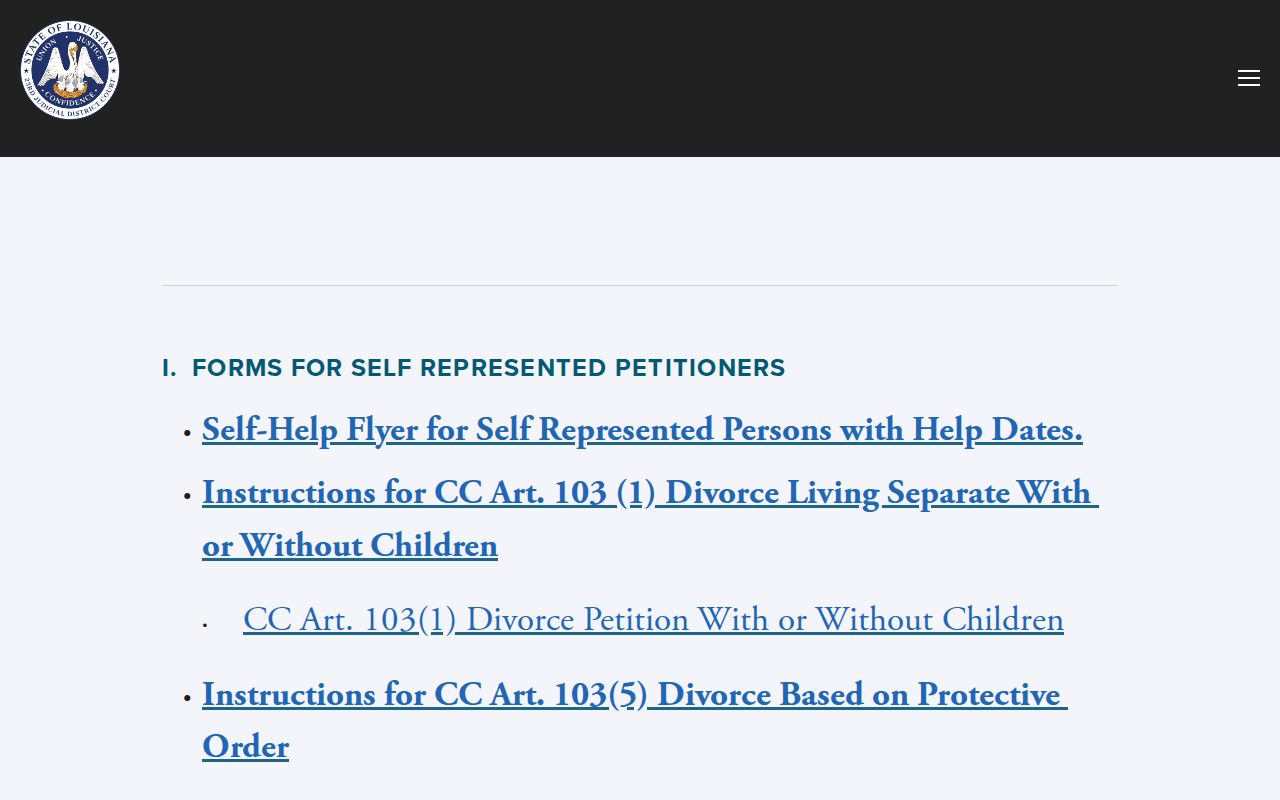
Those Assumption Parish pages hold court paperwork, not a warrant list. A case question still goes to the issuing division.
Assumption Parish Failure-to-Appear Warrants
Notice comes first. Under the Art. 333 sequence, the court must show the defendant was properly told to appear. Then, and only then, the warrant may issue. That is how a closed chapter can reopen. A payment that never reached the court can still show as a failure to appear. So can a notice mailed to an old address in Assumption Parish.
Bench Warrants and Arrest Warrants Compared
Both orders permit an arrest. They simply begin in different places. A bench warrant protects a case already in an Assumption Parish court, while an arrest warrant starts a case on probable cause found by a judge or magistrate.
| Point | Bench Warrant | Arrest Warrant |
|---|---|---|
| What triggers it | A missed court date or unpaid fine | Probable cause of an offense |
| Who orders it | The judge handling the pending case | A judge or magistrate on a complaint |
| What it authorizes | Arrest and return to the case | Arrest and booking on the new offense |
| How it ends | Recall, new date, surrender, or bond | Surrender, bond, or dismissal |
Note: The two can overlap in one case, so ask the court which order is active.
Assumption Parish Bench Warrants Authorize Arrest
Bench refers to the judge's seat, not the stakes. The order still authorizes arrest. Two beliefs cause trouble here. One is that a warrant fades with time, though no official Assumption Parish source publishes an expiration period. The other is that paying a fine clears it; payment settles the fine, not the judge's arrest warrant. A missing portal entry proves nothing either, since portal data can lag and lower-court matters sit outside that dataset. Other holds matter too. A probation or parole hold, another parish warrant, or a federal detainer can change what happens next in Assumption Parish.
Resolving an Assumption Parish Bench Warrant
Resolution runs through the issuing Assumption Parish court. An attorney can ask whether the judge wants a motion, a new appearance, a surrender, or a bond.
- Confirm the warrant and the issuing court.
- Ask what the court wants: a motion, a new date, or an appearance.
- Ask about bond and any separate hold.
- Complete the court's step and ask for a written order.
- Ask the sheriff when the portal entry updates.
Caution: A bench warrant does not clear itself. Recall, a new court date, surrender, bond, and any attorney filing all require a court action, and nothing is automatic.
Court dates move. The general steps sit in the If You Have a Warrant in Assumption Parish section, and a recall must still reach the outstanding warrant list for Assumption Parish. One calendar matters day to day. The district court posts a duty judge calendar covering the day's docket.
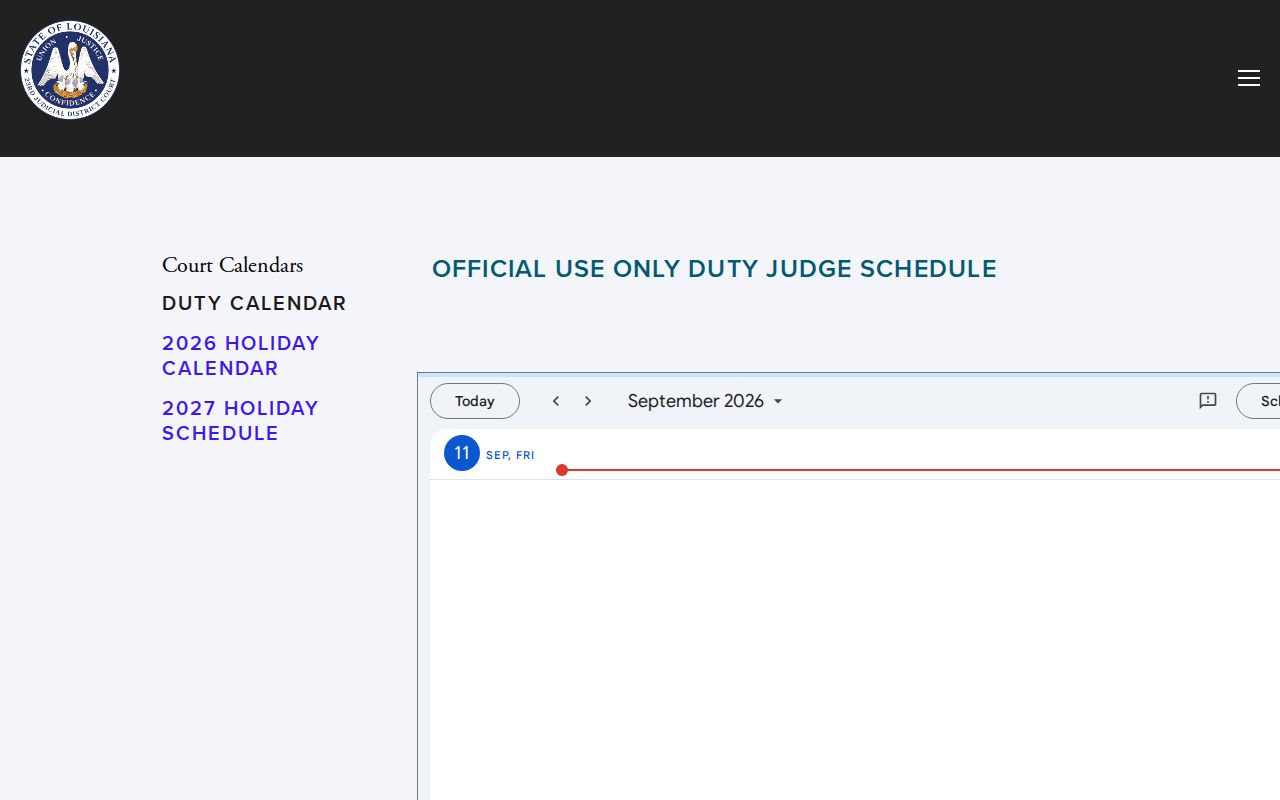
Confirm the division with the clerk before relying on a posted date.
Assumption Parish Sheriff Warrant Portal Limits
The Assumption Parish Sheriff's Office publishes Current Warrants through its public portal. Criteria are required, and juvenile records stay hidden.
| Name, race, sex | Identity fields that narrow a search. |
|---|---|
| Date issued | When the entry was created in the sheriff's system. |
| Bond amount | An amount that may not account for another hold. |
| Warrant type | Not displayed; confirm bench or arrest with the court. |
The Assumption Parish portal answers less than it seems. It offers no warrant-type column, no update timestamp, and no completeness statement, so a result cannot be labeled a bench warrant from the portal alone.
Note: A portal entry and a court file can disagree, and the court order controls the status.
Finding the Court That Issued the Warrant
More than one court can issue an order in Assumption Parish. The Twenty-Third Judicial District Court hears criminal cases in Napoleonville. It runs six divisions. Three justice-of-the-peace courts serve Wards 1, 2, and 3. The Napoleonville Mayor's Court handles camera matters. For a district-court failure to appear, call the Assumption Parish Clerk of Court at 985-369-6653 and ask for the case number and the missed date. The clerk's record search covers civil, criminal, and property records, and it is not a warrant-only list. The district court's site confirms hours and divisions.

That site points the public to the court, not to a warrant desk. Assumption Parish case questions go through the clerk.
Assumption Parish Justice of the Peace Warrants
Assumption Parish runs three justice-of-the-peace courts, one per ward, and each stands apart from the district court. The parish directory names every ward justice. Louisiana R.S. 13:2586 gives each justice the power of a committing magistrate. That means a JP can set bail or discharge a defendant in qualifying cases. So route any warrant question by ward, since a caller living near one office may have a case in another. None of the three courts posts a warrant search or docket. The parish runs no amnesty docket, so the issuing court and an attorney remain the fallback for a bench warrant or other open matter.
Ward 1 Justice of the Peace
Napoleonville, serving Ward 1 precincts.
985-369-2509
Ward 2 Justice of the Peace
Thibodaux, serving Ward 2 precincts.
985-526-6588
Ward 3 Justice of the Peace
Pierre Part, serving Ward 3 precincts.
985-513-1565
Note: Identify the ward before calling, because the three justice courts keep separate records.